How to Fertilize Your New Bermudagrass Seed Lawn

Table of Contents
When should I fertilize my new Bermudagrass lawn after seeding? Fertilize your new Bermudagrass lawn twice: first, by incorporating a high-phosphorus “starter” fertilizer into the topsoil just before or during seeding to promote strong root development, and second, with a lower-phosphorus, slow-release maintenance fertilizer about 4-8 weeks after the seeds have germinated to support ongoing growth. This two-stage approach ensures both initial establishment and long-term health.
Understanding Bermudagrass Nutritional Needs
Planting your new lawn from Bermuda Grass seed requires soil nutrients for good growth in addition to water and sunlight. However, not every soil is ideal for providing adequate nutrition for Bermuda grass, especially the low-quality soils that typically surround new construction. Fertilizing at the right time of year is necessary for adding supplemental nutrients to help your Bermudagrass maintain its optimum health and beauty after it is established.
Most of the nutrients your Bermuda grass seed needs are already supplied to the roots of your grass in small, trace amounts through naturally occurring soil processes. However, Bermudagrass lawns, as with any grass lawn, require three especially important nutrients—nitrogen (N), phosphorus (P) and potassium (K)—in larger quantities than are readily available in most soils. Lawn fertilizers are formulated to provide these nutrients at higher levels than are typically available naturally within most soils.
All commercial fertilizers display three numbers somewhere on their bag, representing its particular combination of nitrogen, phosphorus and potassium. These numbers are the percentages of these nutrients in the fertilizer and are separated by dashes, such as 4-6-4 (or N-P-K). In the example of a 4-6-4 (totaling 14%), the remaining 86% of the fertilizer is made up of filler material (and sometimes other trace ingredients such as calcium, magnesium, iron, etc.) meant to give you the bulk needed to spread the fertilizer evenly over your yard. In the case of an organic based starter fertilizer, the additional weight is not filler, but organic matter, a much needed soil component in sandy and clayey soils. Understanding this N-P-K ratio is key to selecting the appropriate product for your new lawn.
Selecting the Right Starter Fertilizer
Newly seeded Bermudagrass seed lawns need nitrogen, phosphorus, and potassium in a much different combination than an already established lawn. Most fertilizers are not formulated to meet the needs of a newly seeded lawn, which requires a higher concentration of phosphorus (P) to support vigorous root development. Phosphorus is essential during the critical germination and initial root growth stages.
- When planting your new Bermudagrass seeds, make sure to select a “starter” fertilizer or an organic, “slow-release” fertilizer with a higher middle number (P).
- Do not use “weed & feed” fertilizers intended for use on established lawns, as these include weed-preventing chemicals in combination with the fertilizer that can severely damage or kill new seedlings.
- Look for products specifically labeled for use with new grass seed or sod.
Use a Slow Release Fertilizer
Starter fertilizers are designed to remain close to the soil surface where tiny new roots can easily access the phosphorus. Using an organic, slow-release option provides a consistent stream of nutrients without the risk of burning the tender new grass, a common problem with synthetic quick-release fertilizers. This gentle, steady feeding is ideal for the fragile early growth phase of your lawn. Research from organizations like the U.S. Department of Agriculture (USDA) emphasizes the importance of phosphorus in initial plant establishment.
Environmental Considerations of Phosphorus Use
While crucial for new growth, it is important to use phosphorus responsibly. Excessive phosphorus runoff is a significant contributor to surface and groundwater pollution, causing algal blooms and negatively impacting aquatic ecosystems. Always follow the application rates provided on the fertilizer packaging. You may also want to conduct a soil test before seeding to determine your soil’s existing nutrient levels. Many local university extension offices provide these testing services. If your soil already has high phosphorus levels, you may be able to skip the starter fertilizer entirely, protecting the environment while saving money.
Step-by-Step Guide to Pre-Seeding Fertilization
The phosphorus and potassium in your starter fertilizer need to be easily accessible to the seedlings, so it is best to incorporate the fertilizer into the soil as one of the final steps before spreading your Bermudagrass seeds. Timing and proper incorporation are key to maximizing the benefit of the fertilizer and ensuring healthy establishment of the new grass.
Applying the Starter Formula
- Preparation: Before applying, ensure your soil has been properly prepared. This typically involves removing debris, tilling, and correcting the soil pH if necessary.
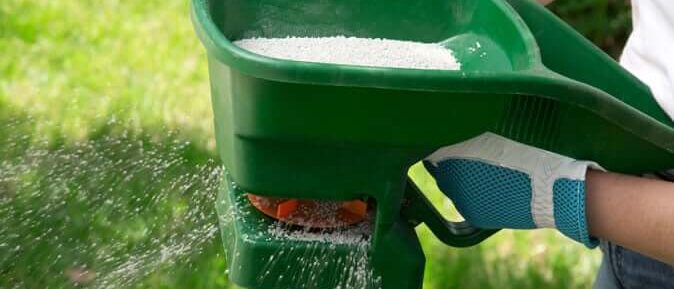
- Application: Use a seed spreader to apply the fertilizer evenly across the entire planting area. This ensures uniform nutrient distribution, leading to a consistently lush lawn.
- Incorporation: The fertilizer should be worked into the topsoil. This can be done manually with a rake and shovel, or mechanically with the use of a tiller. Do not work the fertilizer deeper than 4 inches into the topsoil, as this will place the nutrients beyond the reach of the nascent roots.
Once the starter fertilizer is mixed into the top 2-4 inches of soil, you are ready to proceed with seeding your Bermudagrass. The next step is to broadcast your grass seed according to the package directions, followed by a light rolling or watering to ensure good seed-to-soil contact. Proper preparation sets the foundation for a vibrant and resilient lawn.
Fertilizing Your Bermudagrass After Germination
About 4–8 weeks after the Bermudagrass seeds germinate and the seedlings are actively growing, you should fertilize your grass again. This is the stage when the grass moves from establishment to maintenance, and its nutritional needs shift significantly. Do not continue to use starter fertilizer for this second application.
The higher phosphorus content of starter fertilizers is an important nutrient right after your grass has germinated, but once established, your lawn no longer needs phosphorus at such a high rate. Instead, the focus shifts to nitrogen (N) to support leaf and shoot growth. For this reason, you should transition to a more traditional maintenance fertilizer. An organic, slow-release fertilizer such as an 18-1-8 formulation is better suited for an existing lawn because it provides high nitrogen content with minimal phosphorus and ample potassium for overall plant health.
- Application Method: Use your seed spreader to apply the fertilizer in two directions (e.g., north-south, then east-west) to ensure a perfectly uniform distribution and avoid striping.
- Avoid Over-Application: Always follow the application rate provided on the fertilizer’s packaging. Over-fertilizing can burn the grass and contribute to pollution.
- Cleanup and Watering: Sweep any fertilizer granules that end up on the sidewalk or driveway back onto the lawn. Water the lawn immediately after fertilizing to allow the nutrients to filter down through the soil to the roots, beginning the feeding process.
Maintaining a regular fertilization schedule throughout the growing season, typically every 4–8 weeks depending on the fertilizer type and climate, is vital for the long-term health and density of your Bermudagrass. For more detailed information on turf maintenance, you can consult research from a reputable source like The University of Georgia Turfgrass Program.
FAQ About Bermudagrass Fertilizer
What is the best N-P-K ratio for new Bermudagrass seed?
For new Bermudagrass seed, the best ratio is one with a higher middle number (P), indicating a high concentration of phosphorus. Phosphorus is critical for initial root development. Examples of good starter ratios include 4-6-4 or 10-10-10. Once established, the ratio should shift to a higher first number (N) for shoot growth, such as 18-1-8.
Can I use a ‘weed and feed’ product on newly seeded Bermudagrass?
No, you should **never use ‘weed and feed’ products** on a newly seeded lawn. The herbicide component in these products, designed to prevent weed growth, can also severely damage or kill the tender new Bermudagrass seedlings, preventing successful lawn establishment. Wait until the lawn is mature (usually after 3-4 mowings) before considering herbicides.
Why should I use a slow-release fertilizer?
Slow-release fertilizers break down and feed the grass over an extended period, which is ideal for new lawns. This prevents the grass from getting a sudden, overwhelming dose of nutrients that can cause “fertilizer burn” (browning/scorching) and ensures a steady, healthy growth rate. Organic-based slow-release fertilizers also improve soil structure over time.
Shop Related Products
Premium seed mixes for your project